by Yesenia Gomez-Carrillo
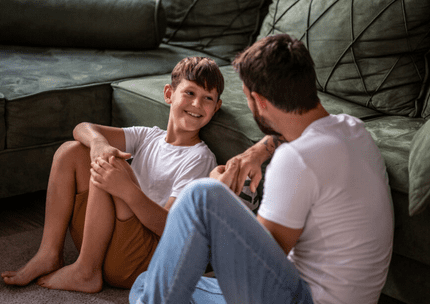
Fathers and father figures play an important role in the lives of children, offering guidance, support, and a sense of stability. Through everyday moments—whether playful, challenging, or routine—they help shape children’s confidence, resilience, and overall well-being.
As we take time to celebrate and support dads, it’s important to recognize the many ways they show up for their families. Fathers and father figures—including stepdads, uncles, grandfathers, and caregivers—help create a strong foundation of care, connection, and belonging that can last a lifetime.
Dear Yesenia, My partner and I just adopted two siblings – a 3-year old boy and an 10-month old girl. We’ve always wanted to be dads but we’re total newbies. Neither of us had good role models when we were growing up. We want things to be different with our kids, but we don’t know what we’re doing. Got any tips for us? Mathew
Dear Mathew, Congratulations on becoming dads! Fathers and father figures play a critical role in children’s well-being, but it still takes time, practice, and patience to be the kind of dad you want to be. That’s because parenting is hard work and children don’t come with an instruction manual! Here are some tips to try:
Spend quality time with your children every day. Find moments throughout the day to give them your undivided attention and affection. Turn everyday tasks such as changing diapers, eating meals, and getting dressed into quality time by giving a hug, smiling, or talking with them. This kind of brief and frequent quality time lets your children know you love and care for them, and that you’re available when they need you. This is the foundation for positive relationships throughout life.
Do engaging activities together. This is another way to spend quality time together while encouraging learning, curiosity, creativity, and skill-building. Read books, play games, go on walks, make meals together – these are all things you can do with your children at any age that will become the basis of their happy childhood memories. Do activities that your children are interested in and follow their lead. And yes, this could mean playing endless games of peek-a-boo or reading the same book a million times. Also introduce them to activities you and your partner enjoy to expand their horizons and bond as a family.
Work as a team with your partner. Talk with your partner about the family rules and expectations that matter to both of you, including how you will handle discipline. This will help make sure you’re on the same page as a parenting team before challenges occur. Make time for you and your partner to talk and connect. It’s easy to get consumed by daily responsibilities and forget to take care of the relationship, but remember that parenting is easier and more enjoyable when you’re a strong team.
Be the role model you wish you’d had. Your children are constantly learning by watching and listening to the way you communicate with others, handle emotions, and solve problems – even when it seems like they’re not paying attention to you. Teach and model the behaviors you want your children to learn – including how to express emotions, give affection, listen, cooperate, and take care of your mental health – and they’re more likely to learn those skills, too.
Final Thoughts: Being a loving, nurturing, supportive father or father figure supports children’s self-esteem, emotional resilience, social skills, and school readiness, and increases their chances of success in school and other activities throughout life. And dads who are actively involved in their children’s lives often report increased happiness and fulfillment. That’s a win-win that deserves to be celebrated!
This monthly column provides tips for anyone who is helping raise children, based on the world-renowned Triple P – Positive Parenting Program, available to families in Santa Cruz County. If you have a question or idea for a future column, email me at triplep@first5scc.org.
Yesenia Gomez-Carrillo is the mother of a 3-year-old daughter and was until recently the Triple P Program Manager for First 5 Santa Cruz County. Scientifically proven, Triple P is made available locally by First 5, the Santa Cruz County Health Services Agency, and the Santa Cruz County Human Services Department. To find a Triple P parenting class or practitioner, visit http://triplep.first5scc.org, http://www.facebook.com/triplepscc, or contact First 5 Santa Cruz County at 465-2217 or triplep@first5scc.org.